

Alternative data for researching a company
Article last updated: September 10, 2026
Philip A. Fisher's Common Stocks and Uncommon Profits is among the best investing books I have read. In it he coined the term "scuttlebutt", the practice of researching a company by talking to its customers, suppliers, competitors and employees rather than relying on what the company says about itself. The method still works, and the internet has made most of it possible from a desk. This article lists the sources I find most useful when researching a company and its business.
Annual reports and earnings calls will not tell you how good a company's products and services really are. In a company's own documents it is always the best at something and always the leader in some subsegment of its market. Alternative data is how you check.
Key takeaways
- Alternative data is information about a company drawn from non-traditional sources rather than from its financial statements, filings or earnings calls.
- The most accessible alternative data sources for individual investors are product review videos, app and product review sites, industry communities, employee reviews, job openings, search trend data and web traffic estimates.
- Alternative data is primarily useful for assessing product quality, customer sentiment, employee sentiment and business direction, which financial statements report only after the fact.
- Alternative data is unstructured, unaudited and self-selected, so it indicates direction and theme rather than measurable quantities.
- Alternative data supplements financial analysis rather than replacing it, because it says nothing about valuation, balance sheet strength or capital allocation.
What is alternative data in investing?
Alternative data is any information about a company that comes from outside its own financial disclosures and outside conventional market data. Product reviews, app store ratings, job postings, employee reviews, search volume and website traffic estimates are all alternative data.
The appeal is timing and perspective. Financial statements describe what has already happened, quarters after it happened, and they describe it from the company's point of view. Alternative data describes what customers and employees are experiencing now. It will not give you a number you can put in a model, but it will tell you whether a product people are supposed to love is actually loved.
None of it removes the uncertainty. Research narrows the range of outcomes rather than fixing them, which is the sense in which investing remains a game of chance no matter how much evidence you gather.
What are the main sources of alternative data for researching a company?
The main alternative data sources available to an individual investor at no cost are product review content, review and rating platforms, industry communities, employee review sites, job listings, search trend data and web traffic analytics. Each answers a different question.
| Source | What it tells you | Where to look |
|---|---|---|
| Product review content | How good the product actually is, versus competitors | Google, YouTube |
| Review and rating platforms | What real customers repeatedly praise and complain about | Google Play, Apple App Store, softwareadvice.com, Google Maps, Yelp, Trip Advisor, Amazon |
| Industry communities | Unfiltered discussion and news within a specific industry | Reddit, Facebook Groups |
| Employee reviews | Working environment, management quality, CEO approval | Glassdoor |
| Job openings | Where the company is investing and what it plans to build | The company's own careers page, LinkedIn, Glassdoor |
| Search trend data | Whether public interest in a brand or product is rising or falling | Google Trends |
| Web and app analytics | Traffic, engagement and audience for a site or app | Similarweb |
The sections below cover each source, why it is useful, and what it cannot tell you.
How do product review videos help you research a company?
Product review videos give you a customer's view of a product when you cannot try it yourself, which is often the case when the product is expensive, unavailable in your region, or sold to businesses rather than consumers. Trying a product first-hand is still the best test; review content is the practical substitute.
Reviews can be long and biased, but they convey more about a product than a paragraph in an annual report does, and good ones benchmark the product against its competitors from a user's perspective. Google and YouTube are the two tools that matter here. As an example, browsing YouTube for streaming hardware comparisons shows how $ROKU, $AMZN, $AAPL and $GOOGL products compare against each other.
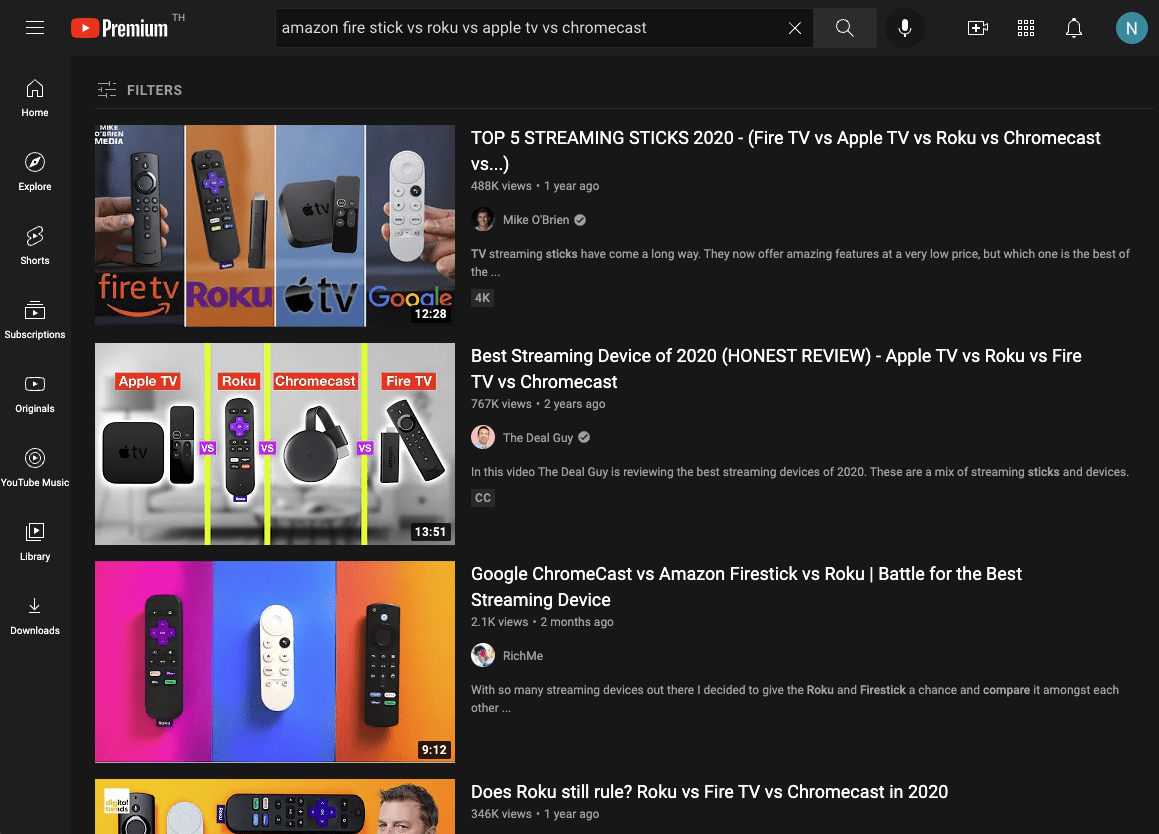
Watch several reviews rather than one, and weight the ones that criticise specifics over the ones that praise generally.
Which review and rating sites are useful for company research?
Review and rating sites are useful because they aggregate enough individual customer opinions that a common theme becomes visible, which a single review or video cannot give you. Which platform to use depends on the market the company sells into:
- Software: Google Play Store, Apple App Store, softwareadvice.com
- Restaurants: Google Maps, Yelp, Trip Advisor
- Other products: Amazon
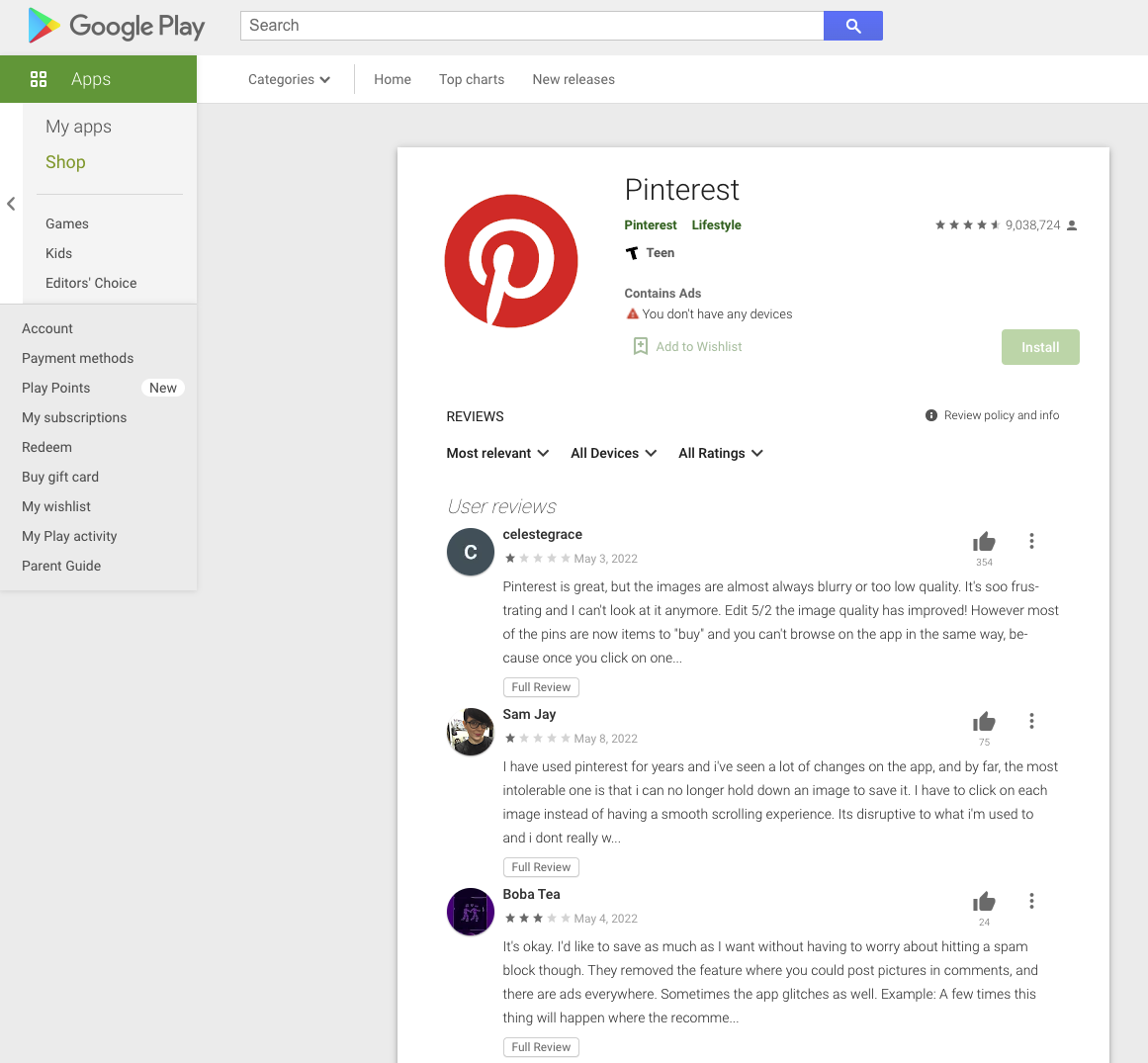
Reading through a body of app reviews surfaces why consumers love a product, why they hate it, and which factors they weigh when choosing it. The average star rating is the least interesting part; the recurring complaints are the signal.
How do industry communities help you research a company?
Industry communities give you the same customer information that review sites give, but usually more candid, and they keep you current on events and news within an industry. Just as investing communities exist, so do communities for almost every other industry.
Reddit and Facebook Groups are the main examples. A subreddit such as r/cordcutters for streaming services shows what enthusiasts in that market are switching to and away from, and why.
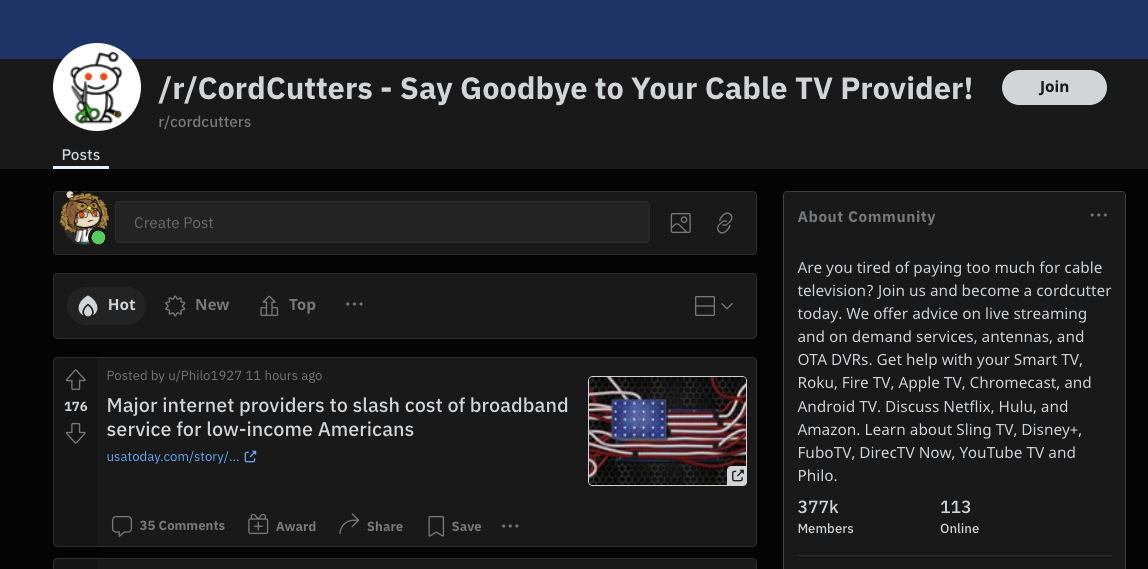
Community members are enthusiasts rather than average customers, so read them as an early indicator rather than a representative sample.
What can Glassdoor reviews tell you about a company?
Glassdoor is a site where current and former employees review their employers, which lets an investor assess a company's working environment and, sometimes, how the business is doing right now. After reading enough reviews, the recurring pros and cons become clear.
Glassdoor also publishes CEO approval ratings, showing what employees think of their own chief executive. Glassdoor's own material explains how investors use Glassdoor and how each rating is calculated.
Treat the volume and trend of reviews as more informative than the score, since departing employees are more motivated to write than satisfied ones.
What do a company's job openings reveal?
A company's job openings reveal where it is investing and what it intends to build, usually well before any of it appears in a financial statement. A sudden run of hiring in one product area or one country is a direction signal that no press release has confirmed yet.
Job opening data can be pulled from the company's own careers site and from job listing platforms including LinkedIn and Glassdoor. The example below came from @AznWeng on Twitter.

Track the count over time rather than reading a snapshot, because the change in hiring is the information, not the absolute number.
How can Google Trends be used to research a company?
Google Trends shows the historical search volume trend for a keyword and lets you compare several keywords on the same chart, which is a rough proxy for public interest in a brand or product. In some cases it gives useful colour on a company's short-term performance.
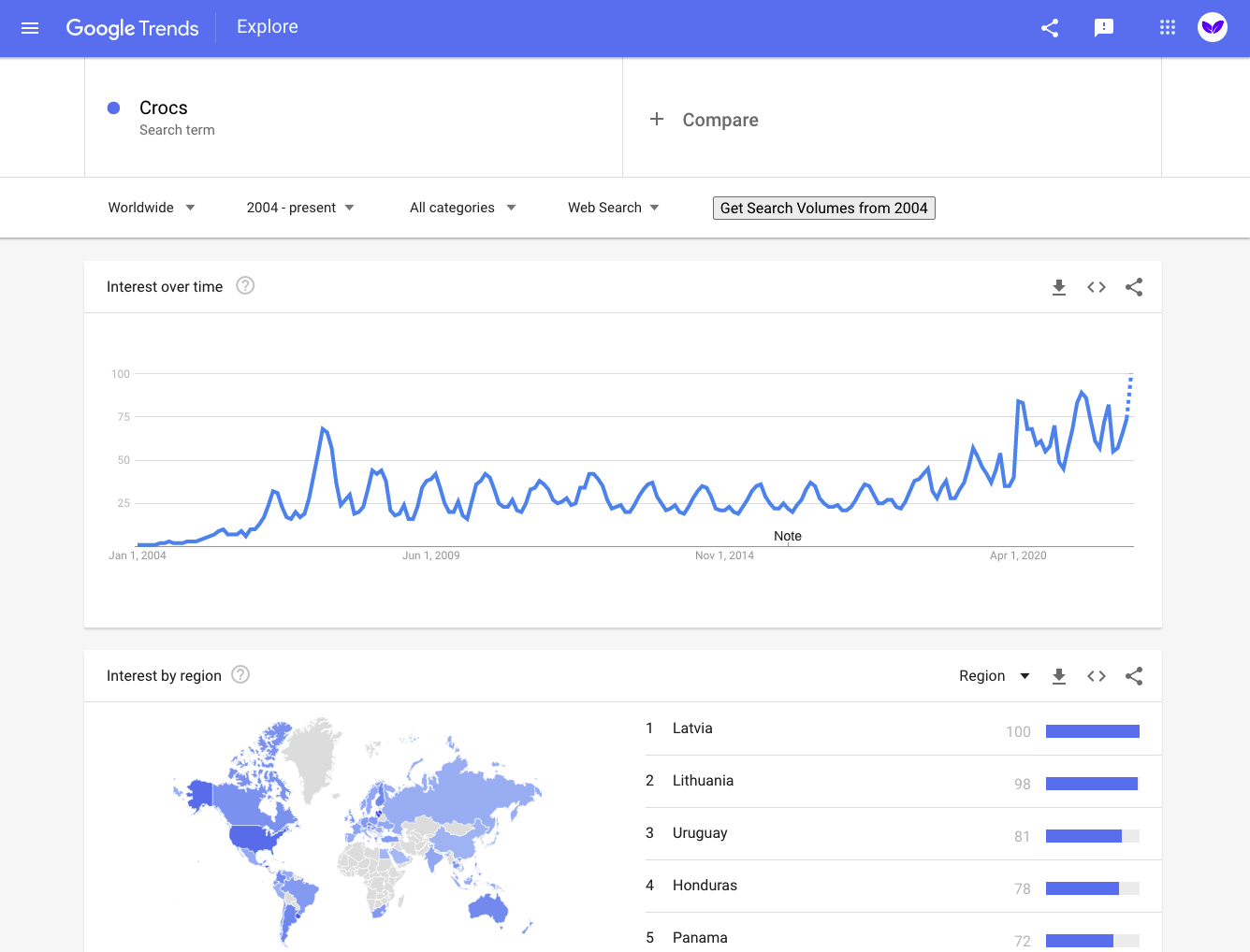
In the example above, Crocs ($CROX) search volume surged during the 2020 Covid lockdowns, which correlated with the company's performance that year. Google Trends reports relative interest on a 0-100 scale rather than absolute search counts, so it shows shape and direction, never a number you can turn into revenue.
How can web and app traffic data be used to research a company?
Web and app traffic data estimates how many people actually use a company's site or app, which for internet businesses is closer to the underlying driver of revenue than anything reported quarterly. Similarweb offers a free tier for analysing websites and apps, including comparing several against each other.
The data includes platform rank, number of visits, bounce rate, average visit duration, ranking trends, visitor demographics such as country, gender and age range, competitors, and user acquisition channels. You can try it on any site, for example Facebook's traffic overview.
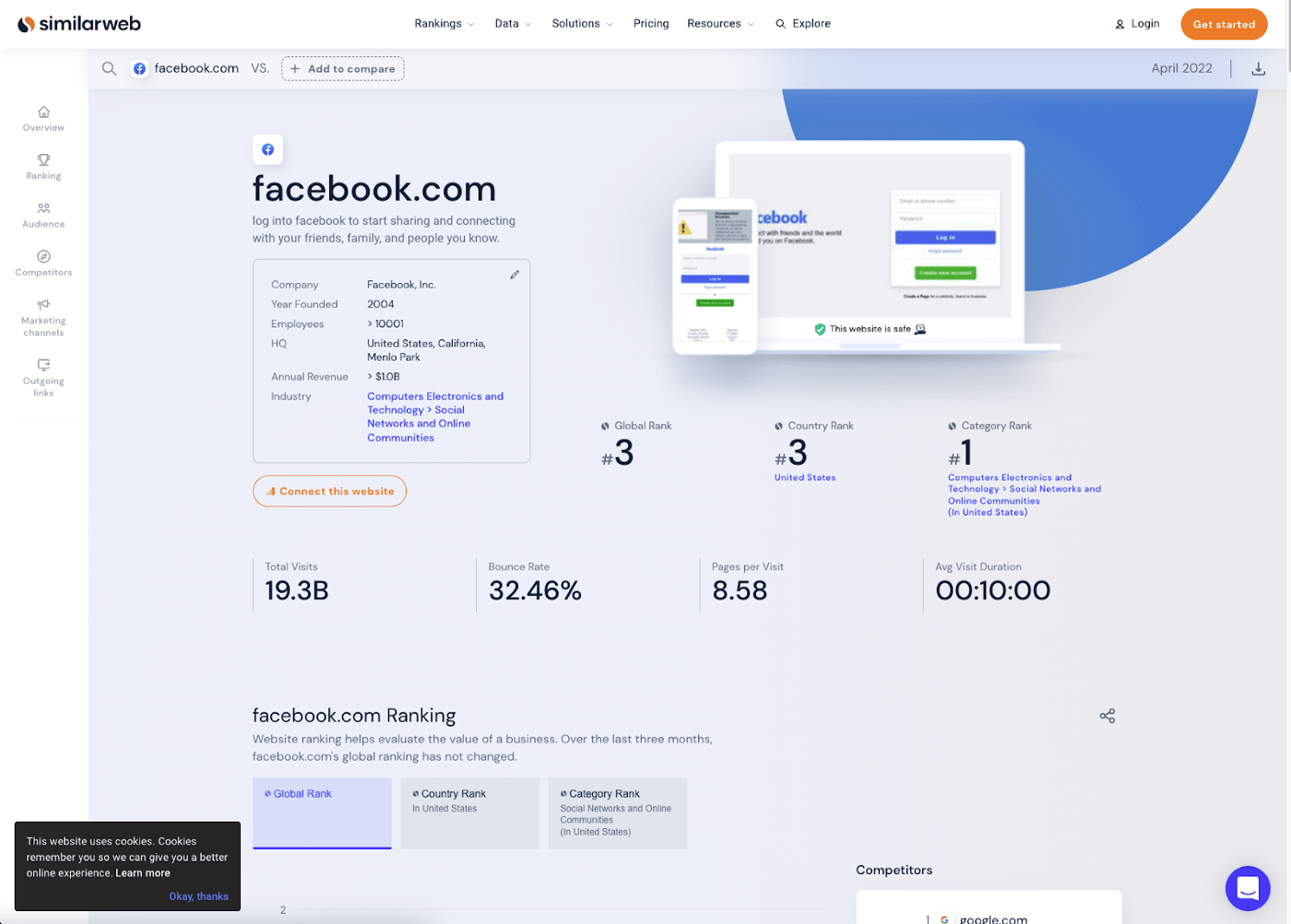
These figures are modelled estimates, not measurements taken from the company's servers, so use the trend and the relative comparison rather than the absolute visit count.
What are the limitations of alternative data?
The main limitation of alternative data is that it is unstructured, unaudited and self-selected, so it supports a qualitative judgement but not a quantitative one. Every source listed above has the same three weaknesses.
- Selection bias. People who write reviews, join communities or rate an employer are not a random sample of customers or staff.
- No units. Search interest and traffic estimates are relative indices, not revenue, so they cannot be converted into a forecast.
- Coverage gaps. Alternative data is abundant for consumer businesses and thin for industrial, B2B and financial companies.
Alternative data also says nothing about valuation, balance sheet strength or how well management allocates capital. A company can have excellent reviews and a poor return on the capital it employs, which is why alternative data belongs alongside financial measures such as return on capital employed rather than in place of them.
Frequently asked questions
Is alternative data legal for individual investors to use?
Publicly available alternative data, such as product reviews, job postings, app rankings and search trend data, is legal to use because anyone can access it. What is not legal is trading on material non-public information obtained from an insider. The distinction is the source, not the format: a public review is research, a leaked internal report is not.
How much time should you spend on alternative data when researching a company?
Alternative data is best used to test a specific question rather than browsed open-endedly, since the volume available is effectively unlimited. Decide what would change your mind about the business first, then look for the sources that address it. Research capacity is one of the real constraints on how many stocks you can own and follow properly.
Can alternative data predict a company's earnings?
Alternative data can indicate the direction of a business before it is reported, but individual investors cannot use it to predict earnings with any precision. The free sources give relative indices and unstructured opinion, not the sampled transaction panels that institutional buyers pay for. Treat it as a way to confirm or challenge a thesis, not as a forecast.
What is scuttlebutt in investing?
Scuttlebutt is Philip Fisher's term for researching a company by gathering opinions from the people around it: customers, suppliers, competitors, former employees and industry participants. Fisher described doing it in person. Product reviews, industry forums and employee review sites are the modern, remote equivalent of the same practice.
How to track the companies you research in Portseido
Portseido is a portfolio tracker for investors who research their own holdings and want a single record of what those holdings actually returned. It consolidates positions across brokers and currencies, tracks cost basis, records dividends and yield on cost, calculates time-weighted and money-weighted returns, and reports allocation and drawdown. Benchmarking a portfolio against indices and ETFs is what closes the loop on research: it tells you whether the work you did on individual companies beat simply owning the index.
Portseido tracks and reports on your portfolio; it does not give buy or sell recommendations, and it does not screen or source alternative data for you. There is a free plan, and paid features come with a 14-day trial that does not need a credit card. Try Portseido free
If you find the list helpful, share it with fellow investors, and if there are other tools you think belong on it, let me know in the comments.